
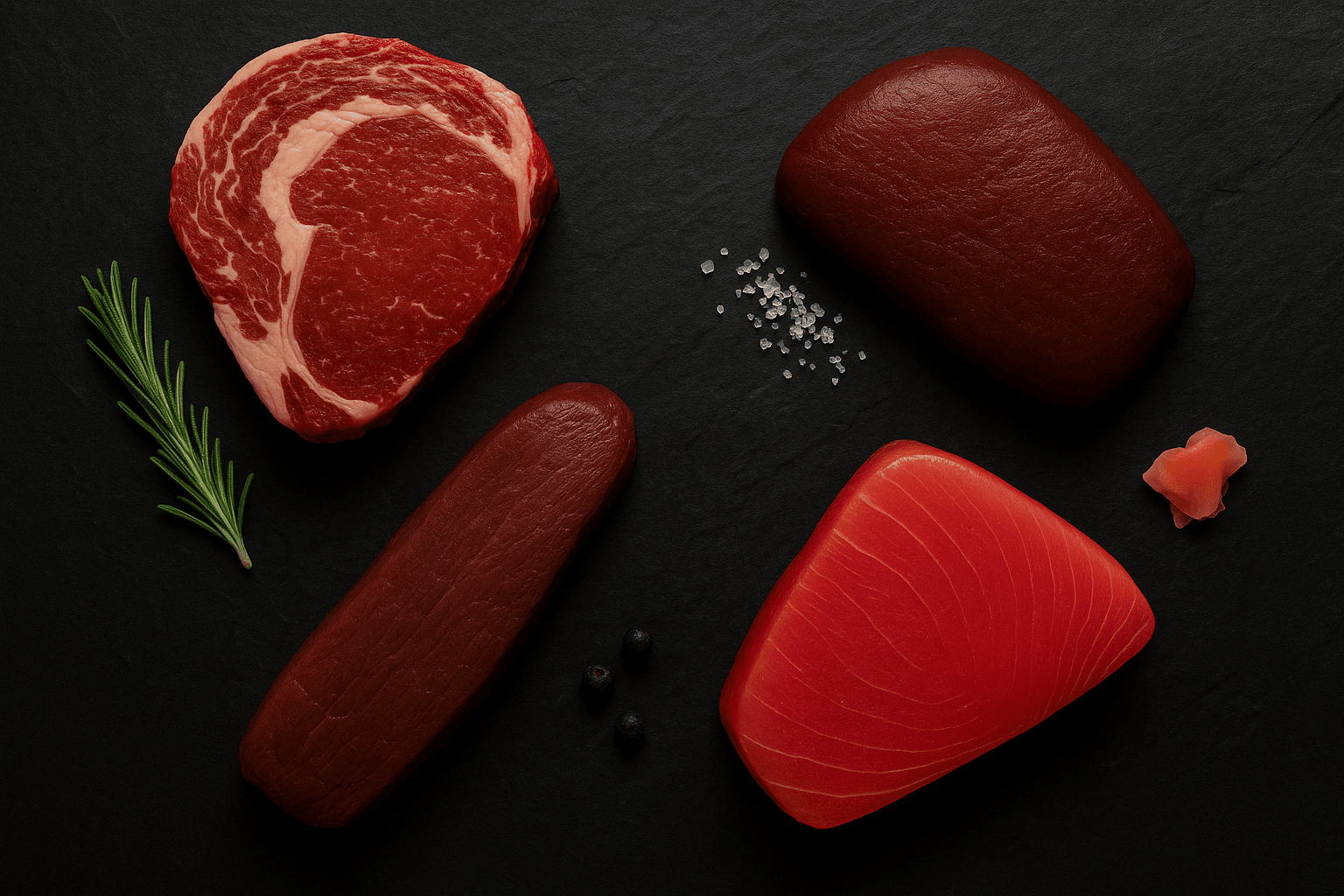
When you hear the sizzle of a thick cut of meat hitting a searing hot pan, your senses ignite. The rich aroma, the deep brown crust, the promise of a juicy, tender interior—this is the magic of a perfect steak. For most, that image is inextricably linked to beef, the undisputed and revered king of the steakhouse. But the world of steak is a vast and flavourful kingdom, with remarkable contenders offering entirely unique experiences for the discerning palate.
The concept of a “steak” is as much about the method of cooking—a quick, high-heat sear on a thick, high-quality cut—as it is about the animal it comes from. As the crisp autumn air settles in, our cravings shift towards heartier, more robust meals. It’s the perfect season to move beyond the familiar and explore the incredible diversity that the land and sea have to offer. This guide is your ringside seat to the ultimate steak showdown. We’ll dive deep into the nuances of flavour, texture, and cooking philosophy for four spectacular contenders: the reigning champion, Beef; the lean powerhouse, Bison; the wild adventurer, Venison; and the ocean’s steak, Tuna. By the end, you’ll know exactly which steak to choose for your next culinary adventure.

ALSO READ: How Replacing Poly B Pipes in Port Coquitlam
The Contenders
- Beef (The Reigning Champion): The benchmark against which all others are measured.
- Bison (The Lean Powerhouse): A healthier, North American native with a surprisingly sweet flavour.
- Venison (The Wild Adventurer): A taste of the wild with a complex, robust character.
- Tuna (The Ocean’s Steak): A surprise entry proving a great steak doesn’t need a pasture.
Beef: The Reigning Champion
There is a profound, almost primal satisfaction that comes from a perfectly cooked beef steak. It is the gold standard for a reason. Its popularity is built on a foundation of rich flavour, satisfying texture, and remarkable versatility.
Deep Dive on Flavour
The quintessential taste of beef is a complex harmony of savoury, buttery, and slightly sweet notes. This flavour is unlocked through the magic of high-heat cooking. As the steak hits the hot surface, the Maillard reaction begins, a chemical transformation between amino acids and reducing sugars that creates hundreds of new aromatic compounds responsible for that deep brown crust and incredible savoury depth.
The flavour is also directly tied to the animal’s diet and the cut’s fat content. Grain-fed beef tends to be milder and buttery with brilliant marbling, while grass-fed beef offers a more robust, earthy, and purely “beefy” flavour. The specific cut you choose also plays a massive role; a ribeye will be decadent and rich from its high fat content, while a filet mignon is leaner and more subtle. To learn more about selecting the right cut for your meal, explore our complete guide to beef cuts.
Texture and Marbling Explained
The secret to a beef steak’s succulent, melt-in-your-mouth texture is marbling. These are the fine threads of intramuscular fat that weave through the muscle. When cooked, this fat melts, basting the meat from the inside out, ensuring it remains juicy and tender while infusing it with flavour. Beef is graded based on the degree of marbling, with Prime being the most marbled and luxurious, followed by Choice and Select. This marbling gives beef a tender yet satisfying chew that is both hearty and decadent.
The Cooking Philosophy
Cooking beef is an art of controlling heat. The goal is to create a stark contrast between a flavour-packed, dark brown crust and a perfectly cooked, tender interior. This is best achieved with high, direct heat from a grill or a heavy-bottomed skillet, like cast iron. For thicker cuts (over 1.5 inches), many chefs swear by the reverse-sear method, where the steak is slowly brought to temperature in a low oven before being finished with a blistering sear.
Regardless of the method, the single most important tool for success is a digital instant-read thermometer. It eliminates guesswork and guarantees you hit your target temperature every time. For a flawless medium-rare, pull the steak from the heat at around 130∘F (54∘C). To master this essential skill, be sure to read our tutorial on how to use a meat thermometer correctly. Finally, always let your steak rest for 5-10 minutes after cooking to allow the juices to redistribute, ensuring every bite is succulent.
Bison: The Lean Powerhouse
Venture into the world of North American heritage meats, and you’ll find bison. Often touted as a healthier alternative to beef, bison steak is not just a substitute; it’s a destination in its own right, offering a unique flavour profile and a lean, powerful nutritional punch.
Flavour Profile in Depth
At first bite, bison is familiar, sharing a similar profile to beef. However, as you chew, its unique character emerges. The flavour is deeper and cleaner, with a distinct yet subtle sweetness and a rich, earthy finish. This sweetness is due to a higher concentration of glycogen in the muscle. Because it has significantly less fat, the pure flavour of the meat shines through without the buttery richness that marbling provides, resulting in a cleaner, more mineral-forward taste that many people prefer.
The Lean Machine: Texture and Nutrition
Nutritionally, bison is a champion. It’s a lean protein that is lower in calories and fat than beef while being packed with more iron and protein per serving. This leanness is the key to its texture. The muscle fibers are finer, and without the abundant marbling of beef, the texture is heartier and slightly denser. When cooked with care, it is wonderfully tender, but this lack of fat leaves very little room for error.
The Cardinal Rule of Cooking Bison
If you remember one thing about cooking bison, let it be this: do not overcook it. The low fat content means there is less insulation within the muscle, so it cooks significantly faster than beef—often about 30% quicker. High heat and short cooking times are your best friends.
- Preparation: Let the steak come to room temperature and pat it completely dry. Season generously.
- Searing: Use a very hot pan with a neutral oil. Sear for just 2-4 minutes per side, depending on thickness.
- Temperature: Aim for rare to medium-rare, pulling it from the heat at 125−130∘F (52−54∘C). Pushing it to medium or beyond will result in a dry, tough, and disappointing steak.
Because of its lean and sweet profile, bison pairs wonderfully with robust flavours. Try our recipe for a Perfect Pan-Seared Bison Steak with Rosemary Butter to experience it at its best.
Venison: The Wild Adventurer
For those whose palates seek complexity and a genuine taste of the wild, venison is the ultimate steak. Sourced from deer, this game meat is a reflection of its environment, offering a deep, robust flavour profile that is both challenging and incredibly rewarding.
Deconstructing “Gaminess”
The term “gamy” is often misunderstood. Far from being a flaw, it is the signature characteristic of venison. This flavour is a direct result of the animal’s active lifestyle and natural diet of grasses, herbs, acorns, and bark. It translates into a steak that is profoundly earthy, rich, and complex, with aromatic notes that can evoke sage, juniper, and moss. It’s a flavour that is bold and unapologetic—a true taste of the terroir.
Texture: Lean and Mean
Venison is the leanest of the land animals in this showdown. The muscle is dense with a very fine grain and virtually no marbling. This structure means that when cooked correctly, it can be astonishingly tender—often compared to beef tenderloin in texture. However, this same leanness makes it highly unforgiving. If overcooked, the proteins seize up, turning the steak tough and livery in an instant.
Taming the Wild
Cooking venison is about embracing its leanness and complementing its bold flavour.
- Marinades: While not always necessary for a prime cut like the loin, a good marinade can help tenderize tougher cuts and balance the gaminess. Ingredients like red wine, vinegar, juniper berries, and rosemary are classic pairings.
- Hot and Fast: Like bison, venison demands a quick sear over high heat. The goal is to build a flavourful crust while leaving the interior a beautiful ruby red.
- Doneness is Critical: Do not cook venison past medium-rare (130∘F / 54∘C). Any more, and you risk ruining its delicate texture. Resting is also crucial to retain its natural juices.
Tuna: The Ocean’s Steak
Our final contender challenges the very definition of steak. A thick, center-cut loin of high-quality Ahi tuna has earned its title as the “steak of the sea” for its firm, meaty texture and its ability to stand up to classic steak cooking methods.
Flavour and Texture
Ahi tuna offers a clean, savory flavour rich in umami, with a subtle brininess that speaks of the ocean. Unlike its land-based counterparts, its richness comes not from marbled fat but from healthy omega-3 oils. The true magic of a tuna steak lies in its textural contrast. When seared perfectly, you get a warm, nutty, and firm crust that gives way to a cool, silky, and almost raw interior that is unbelievably tender.
Sourcing and Searing
There is one non-negotiable rule here: you must use sushi-grade or sashimi-grade tuna. This ensures it is safe to be consumed rare, which is the only way it should be prepared.
- The Pan: Use a skillet (cast iron or stainless steel) that can get screaming hot.
- The Sear: Lightly coat the tuna in a high-smoke-point oil. Place it in the hot pan and sear for just 60-90 seconds per side. You want to cook only the outer 1/4 inch, leaving the center a vibrant, translucent red.
- Serving: Let it rest for a minute before slicing it against the grain into thick pieces. It pairs beautifully with Asian-inspired flavours like soy, ginger, wasabi, and sesame.
Head-to-Head Comparison
| Feature | Beef (Sirloin) | Bison (Sirloin) | Venison (Loin) | Tuna (Ahi Loin) |
| Flavour Profile | Rich, Buttery, Beefy | Deep, Earthy, Sweet | Gamy, Robust, Earthy | Mild, Savory, Umami |
| Texture | Tender with a good chew | Firm yet tender | Fine-grained, Dense | Silky when rare, Firm sear |
| Fat Content | Moderate to High | Very Low | Extremely Low | Low (rich in oils) |
| Best Doneness | Medium-Rare | Rare to Medium-Rare | Rare | Seared Rare |
| Cooking Tip | Versatile, loves high heat | Cooks 30% faster than beef | Marinate and cook quickly | 60-90 seconds per side |
| Pairs Well With | Potatoes, red wine, mushrooms | Root vegetables, dark beer | Berries, red wine, juniper | Soy-ginger, wasabi, sesame |
Export to Sheets
The Final Verdict: Which Steak Is Right for You?
After facing off in flavour, texture, and technique, it’s clear there is no single champion. The perfect steak is a matter of personal taste and occasion.
- Choose BEEF when you crave the comforting, classic, and decadent steakhouse experience. It is the reliable and satisfying king for a reason.
- Choose BISON when you want a lean, nutrient-dense red meat that delivers a powerful, slightly sweet flavour without the high fat content.
- Choose VENISON when your palate is adventurous and you seek a complex, bold, and truly wild flavour that tells a story of its origin.
- Choose TUNA when you desire a steak dinner that is elegant, light, incredibly fast to prepare, and bursting with clean, savory umami flavour.
The true winner of this showdown is the curious cook. Don’t let the word “steak” limit you to one choice. Step outside your comfort zone, fire up your skillet, and discover a whole new world of flavour.